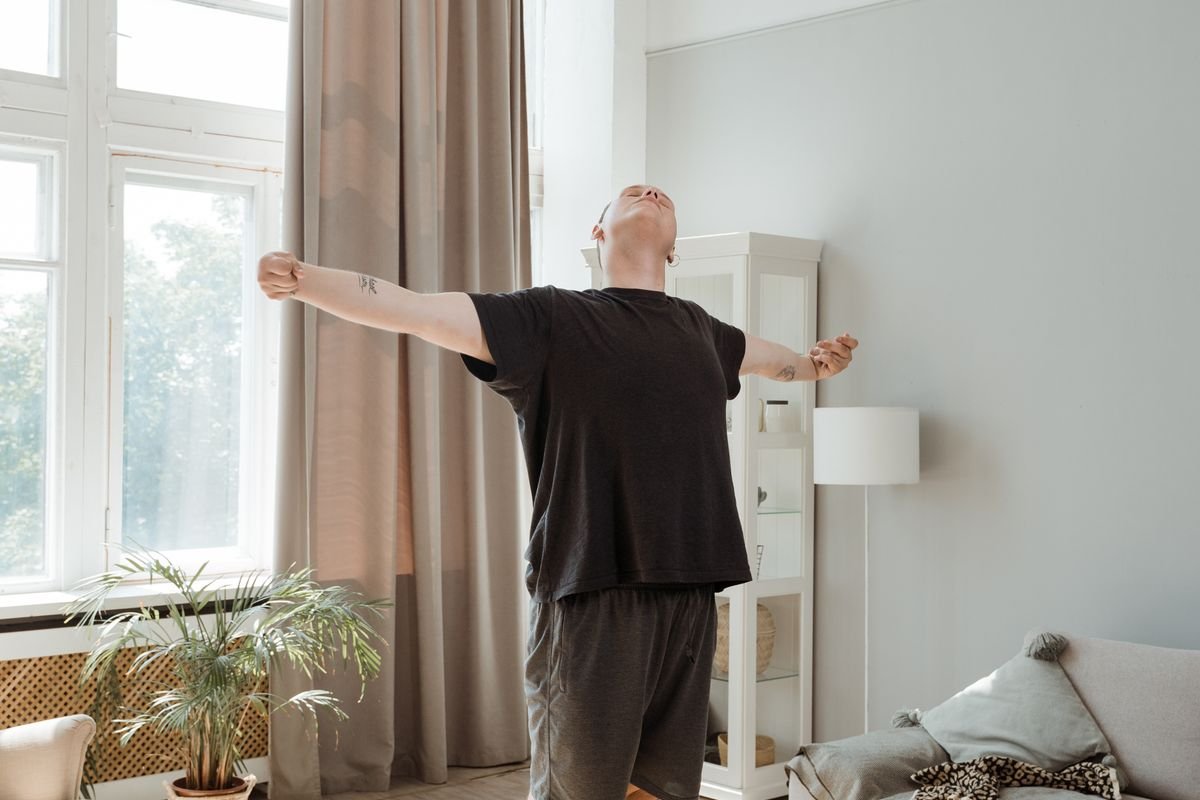
By the time you sit down at your desk, your body may already have been still for hours. Add another eight seated hours and stiffness is almost guaranteed. Ten minutes of gentle movement at the start of the day can take the edge off.
Why Mornings Help
After a night of rest, muscles and joints feel tight. Long stretches of sitting then shorten the muscles at the front of the hips and chest, while the neck and shoulders creep forward. Gentle stretching warms the tissues, restores range of motion and helps you feel looser before the day begins.
It will not fix every ache, and it is not a substitute for regular movement. Think of it as a calm, low-effort way to start well.
Before You Begin
- Wear comfortable clothing that lets you move freely.
- Use a mat or a clear patch of floor.
- Move slowly and never bounce. You should feel a mild pull, not pain.
- Hold each stretch for 20 to 30 seconds and keep breathing normally.
The 10-Minute Routine
- Shoulder rolls (1 minute). Stand tall and roll your shoulders slowly backward, then forward. Let the movement get bigger as the muscles warm up.
- Neck side tilts (1 minute). Drop your right ear toward your right shoulder and hold for about 30 seconds. Switch sides. Keep the opposite shoulder relaxed.
- Chest opener (1 minute). Clasp your hands behind your back, straighten your arms and lift gently while drawing your shoulder blades together. This counters the rounded posture of desk work.
- Cat-cow (1 minute). On hands and knees, arch your back as you inhale, then round it as you exhale. Move with your breath.
- Low lunge for the hip flexors (2 minutes). Step one foot forward, lower the back knee to the floor and shift your weight forward until you feel a stretch at the front of the back hip. Hold, then switch.
- Standing forward fold with soft knees (1 minute). Hinge at the hips and let your upper body hang. Keep your knees slightly bent to protect your lower back.
- Seated spinal twist (1 minute). Sit on the floor or a chair, turn gently to one side and hold the back of the chair or your knee. Repeat on the other side.
- Wrist and forearm stretch (1 minute). Extend one arm, palm up, and gently pull the fingers back with the other hand. Then flip the palm down and repeat. Typing and mouse use make these muscles work hard.
- Calf stretch (1 minute). Press your hands against a wall, step one foot back with the heel down and lean forward. Switch legs.
Making It a Habit
The best routine is the one you actually do. These small tricks help:
- Attach it to something you already do each morning, such as right after getting dressed.
- Leave your mat where you can see it.
- Start with five minutes on busy days instead of skipping entirely.
- Keep it simple. Consistency matters more than depth.
A Two-Minute Reset During the Workday
Stretching in the morning helps, but sitting for hours still takes a toll. Try standing up every 30 to 60 minutes. Roll your shoulders, stretch your wrists, take a short walk to refill your water and look at something far away to rest your eyes. Small breaks add up.
When to Go Gently or Check With a Professional
Skip or modify any movement that causes sharp pain. If you are recovering from an injury, pregnant, or living with a condition affecting your joints or spine, ask a doctor or physiotherapist which stretches suit you. Numbness, tingling, or pain that lingers for days deserves a proper assessment.
Frequently Asked Questions
Is it better to stretch before or after exercise?
Gentle mobility work suits a warm-up, while longer holds tend to feel best after exercise, when muscles are warm. A morning routine like this one is a light, general start rather than a workout.
How long before I feel a difference?
Many people feel looser right away. Lasting changes in flexibility usually take several weeks of regular practice.
Can stretching cure back pain?
It may ease stiffness for some people, but persistent or severe back pain needs a proper evaluation. Stretching alone is not a treatment for every cause.
Do I need to do the whole routine every day?
No. Even three or four of these movements, done regularly, can help. Pick the ones that feel most useful for your body.
The Takeaway
You do not need a gym or special equipment to ease desk stiffness. Ten unhurried minutes, a few mindful breaths and regular breaks during the day can change how your body feels by afternoon.
This article is general information, not medical advice. Please consult a doctor or physiotherapist if you have pain, an injury or a health condition.