A good sweater is an investment, and it can last for years if you treat it kindly. Most knitwear damage comes from just three things: too much washing, too much heat and too much hanging. Fix those and your favorite knits will keep their shape, softness and color.
Start With the Care Label
Always check the label first. Wool, cashmere, cotton, acrylic and blended knits all behave differently. Some wool can be machine washed on a wool cycle, while delicate cashmere or anything marked “dry clean only” deserves more caution. When in doubt, hand washing is the safest option.
Wash Less, Not More
Knitwear rarely needs washing after every wear. Natural fibers such as wool resist odors, and airing a sweater is often enough.
- Hang it in a well-ventilated spot for a few hours after wearing.
- Spot clean small marks with a damp cloth and a drop of gentle detergent.
- Wash only when the sweater looks dirty or smells stale, usually after several wears.
How to Hand Wash a Sweater
- Fill a basin with lukewarm water. Hot water causes shrinking and felting.
- Add a small amount of wool-friendly detergent. Harsh products can strip natural fibers.
- Turn the sweater inside out and submerge it. Press gently and swish. Do not rub or scrub.
- Soak for about ten to fifteen minutes, then drain the water.
- Rinse in clean lukewarm water until no suds remain.
- Press out the water. Never wring or twist, as this stretches the fibers.
Dry It Flat
This is the single most important rule. A wet sweater is heavy, and hanging it will stretch the shoulders and sleeves permanently.
- Lay the sweater flat on a clean, dry towel.
- Roll the towel up with the sweater inside and press gently to absorb extra water.
- Unroll and lay the sweater on a fresh towel or drying rack, reshaping it with your hands.
- Keep it away from direct heat and strong sunlight, which can fade colors and make fibers brittle.
Avoid tumble dryers for wool and cashmere. Heat and tumbling cause shrinkage.
Dealing With Pilling
Those small fuzzy balls form where fabric rubs against itself, such as under the arms, along the sides and where a bag strap sits. Pilling is normal, especially with new knitwear, and it does not mean the garment is poor quality.
To remove pills:
- Use a fabric shaver or a fine knitwear comb, working gently over a flat surface.
- Do not pull pills off by hand, as this can tug the yarn.
- Repeat as needed. Pilling often settles after the first few washes.
To reduce future pilling, avoid wearing knits under rough bags or straps, and wash them inside out.
Fixing Snags
If a thread pulls out, do not cut it. Use a small crochet hook or a needle to pull the loop through to the inside of the garment. Cutting can leave a hole that unravels.
Store Knits Properly
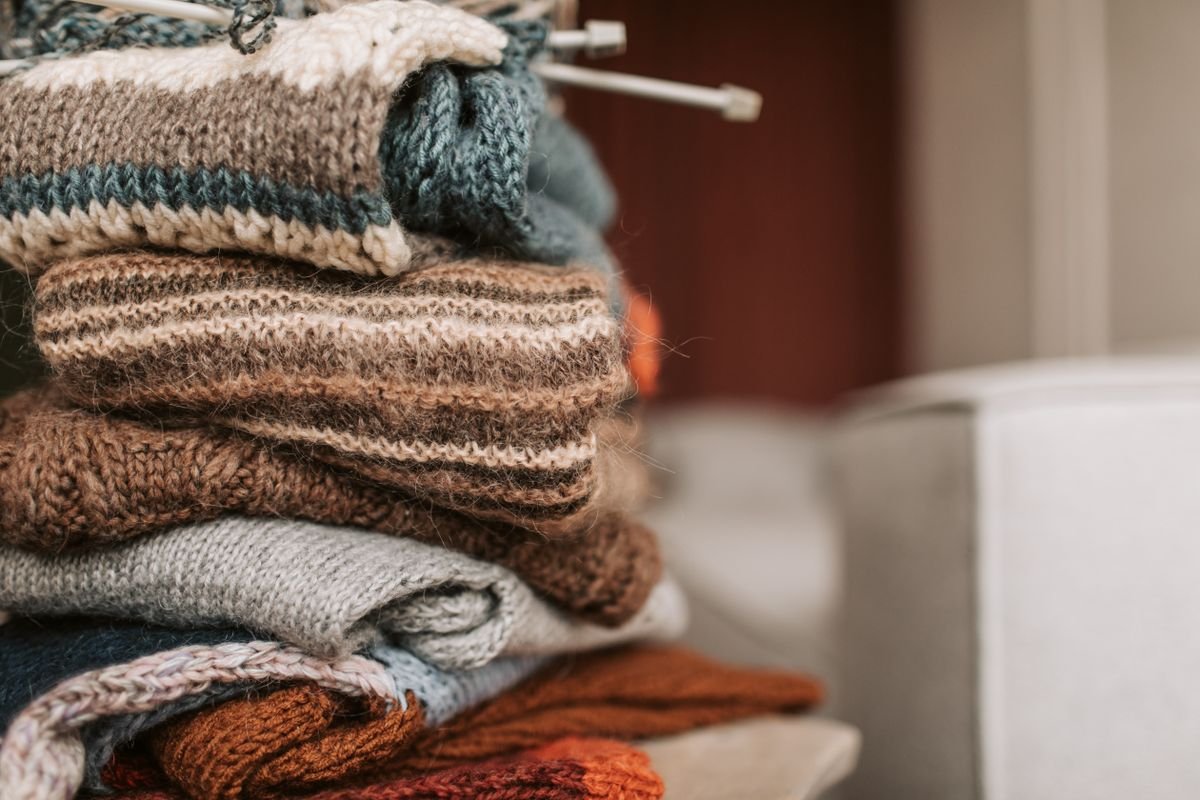
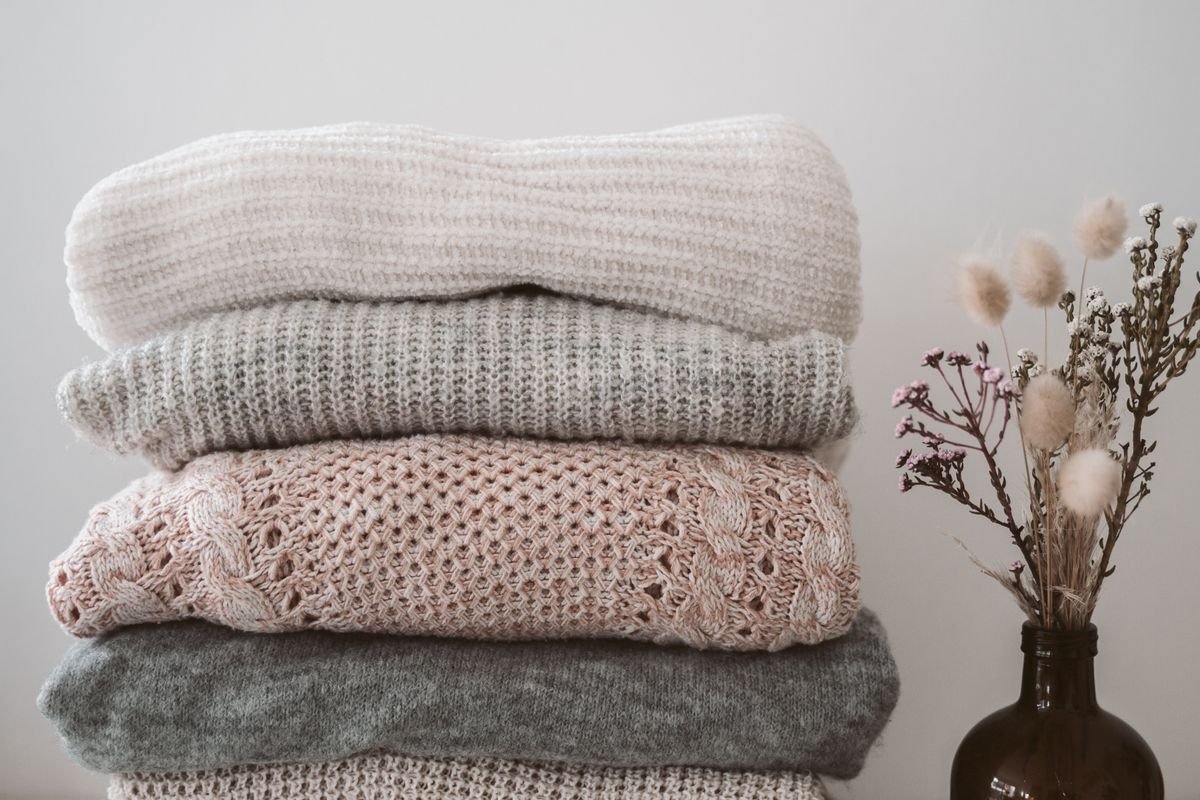
- Fold, don’t hang. Hanging stretches the shoulders. Fold sweaters and store them in a drawer or on a shelf.
- Clean before storing. Food stains and body oils can attract moths.
- Keep them breathable. Use cotton bags or boxes, not sealed plastic, which traps moisture.
- Protect against moths. Cedar blocks or lavender sachets help, and a periodic check is wise.
- Do not overcrowd. Squashed knits lose their shape.
Refreshing Without Washing
A handheld steamer or the steam setting on an iron, held a little above the surface, can relax creases and freshen the fibers. Never press an iron directly onto knitwear.
Frequently Asked Questions
Can I put wool in the washing machine?
Only if the label allows it, using a wool or delicate cycle with cool water and a mesh laundry bag. Hand washing is gentler.
My sweater shrank. Can I fix it?
You can sometimes relax the fibers by soaking the sweater in lukewarm water with a little hair conditioner, then gently stretching and drying it flat. Results vary, and severe shrinkage may be permanent.
Why does my sweater feel itchy?
Coarser wool can irritate sensitive skin. Merino and cashmere are generally softer, and a thin cotton layer underneath helps.
How can I tell if a knit is good quality?
Look for tight, even stitches, neat seams and fabric that springs back when you gently stretch it.
The Takeaway
Wash gently and rarely, dry flat, fold instead of hanging and remove pills with a proper tool. These small habits protect your knitwear far more than any special product. A few minutes of care now means your favorite sweaters will still look good for many winters.