A wall of framed art can turn a plain room into something personal and memorable. Yet many gallery walls end up crooked, crowded or full of holes in the plaster. With a few simple planning steps, you can create an arrangement that looks deliberate, using pieces you already love.
Why Gallery Walls Work
- They let you mix sizes, subjects and styles without needing one large, expensive piece.
- They add personality and warmth, especially in hallways, living rooms and stairwells.
- They can grow slowly over time as you add new pieces.
- They use vertical space well in small rooms.
Choose Your Content
Begin by gathering what you have, then decide what you would like to add. A gallery wall can include many kinds of items:
- Framed prints and posters
- Botanical illustrations and pressed flowers
- Landscapes and abstract art
- Typography and meaningful quotations
- Children’s drawings
- Family photographs
- Textiles, woven pieces and small mirrors
Choose pieces that reflect the atmosphere you want, calm, cheerful or elegant. Think about the values of your household too, and select images that you are happy to live with every day.
Pick a Unifying Element
A collection of random pieces looks messy. One consistent element ties everything together.
- Color palette. Pick two or three colors that appear in most pieces, or choose all black-and-white images.
- Frame style. Use matching frames in the same color and finish, or a mix of two tones, such as black and light wood.
- Theme. Nature, travel, family or abstract shapes can all link a wall.
- Mats. White mats around different images give a clean, gallery feel.
Plan on the Floor First
Never start by hammering nails. Plan the whole layout on the floor.
- Measure the wall space, and mark the same area on the floor with painter’s tape.
- Lay out your frames inside the taped area.
- Move them around until the arrangement feels balanced. Take a photo of each version to compare.
- Keep a consistent gap between frames, usually 5 to 8 cm, for a neat look.
Try a Classic Layout
- The grid. Frames of the same size are arranged in even rows and columns. Clean, modern and simple.
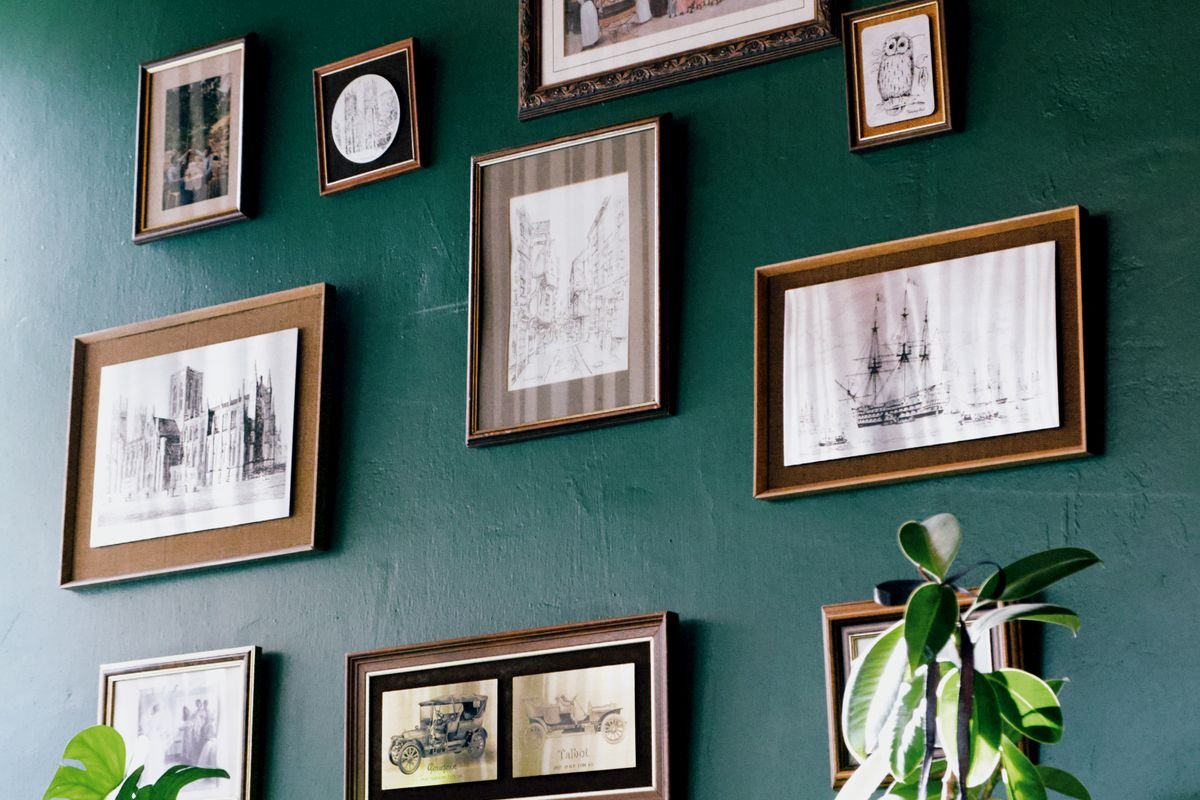
- The salon style. Many frames of different sizes fill a large area in an organic cluster. Create a loose rectangle or oval, and place the largest piece slightly off-center.
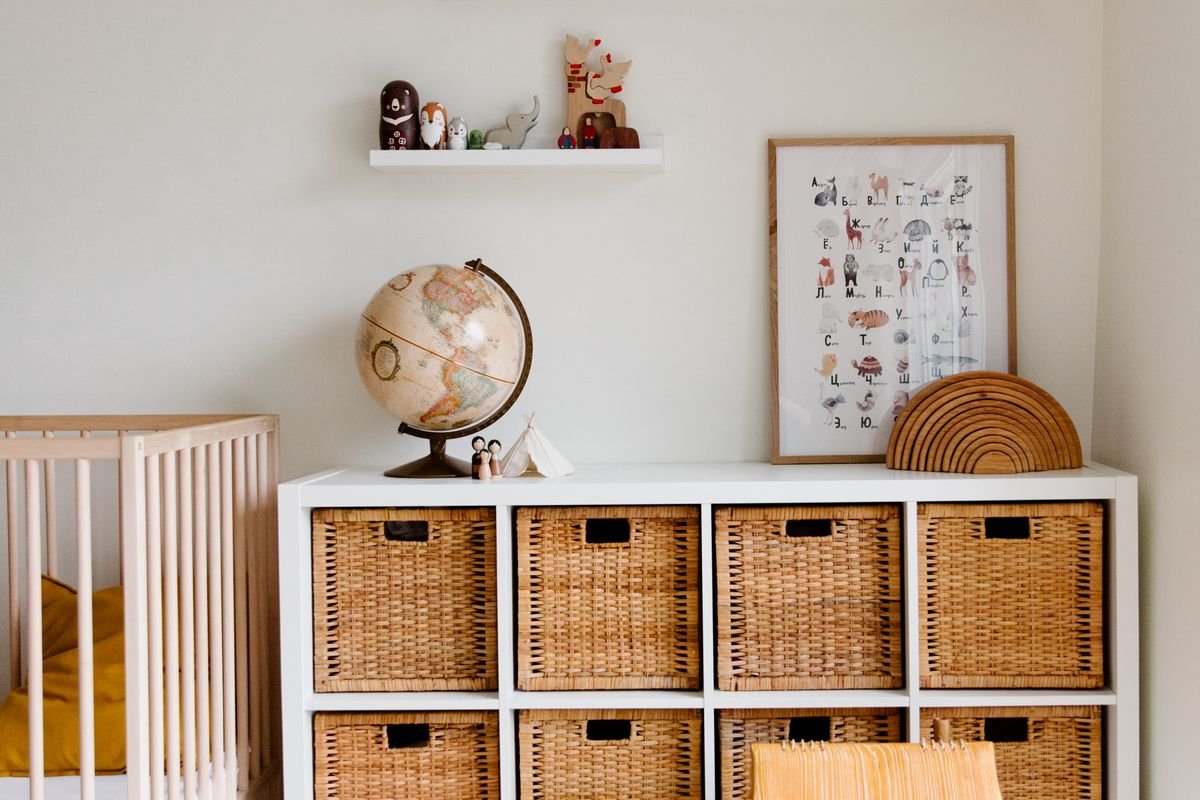
- The ladder. Frames lean on a narrow shelf or ledge, and you can swap them easily without drilling.
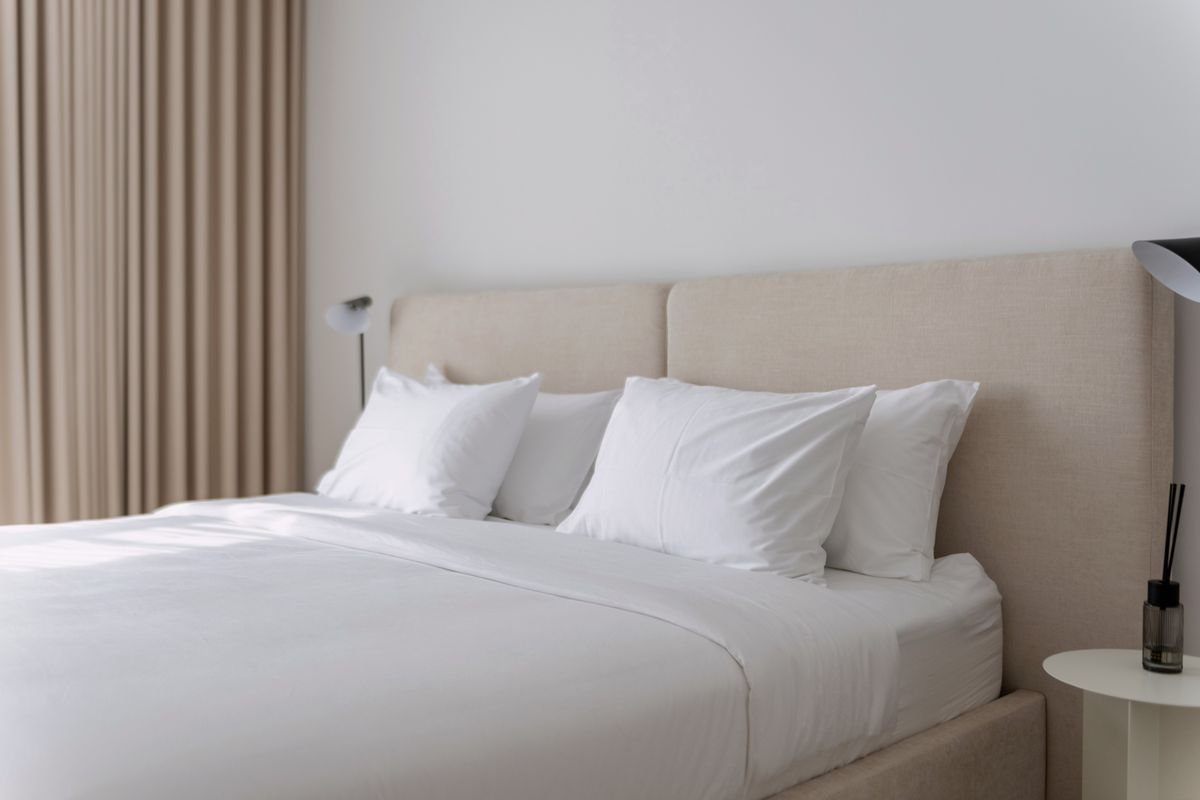
- The single line. A row of frames at the same height, perhaps above a sofa or a bed. Good for narrow spaces.
Get the Height Right
The most common mistake is hanging art too high. As a general rule, the center of the artwork, or the center of the whole arrangement, should sit at about 145 to 155 cm from the floor, which is roughly eye level. When hanging above furniture, leave about 15 to 25 cm between the top of the sofa or console and the lowest frame. The group should also span about two thirds of the furniture width.
Hang Without Wrecking Your Walls
- Cut paper templates the size of each frame, and tape them on the wall in your planned layout. Adjust them until you are happy.
- Mark the hanging point on each template, then hammer a nail or screw through the paper, and tear the template away.
- Use the right fixings. Picture hooks suit lighter pieces, while wall plugs and screws are better for heavy ones.
- Check the wall. Use a stud finder or be careful with pipes and wires behind the surface.
- Use a level. Even a small tilt shows in a gallery wall.
If you rent or want to avoid holes, removable adhesive strips work well for light frames. Check the weight limit on the packaging.
Balance Large and Small Pieces
- Begin with the largest piece and position it first, then build around it.
- Spread dark and light pieces evenly, so one side does not feel heavy.
- Vary orientation by mixing portrait, landscape and square frames.
- Leave breathing space. A crowded wall looks cluttered.
Add Depth and Interest
- Include one or two small objects, such as a mirror, a woven basket or a small shelf with a plant.
- Mix flat frames with textured elements like pressed flowers or fabric pieces.
- Add soft lighting, such as a picture light or a nearby lamp, to bring the wall to life in the evening.
Care and Protection
- Keep art away from direct sunlight, which fades color.
- Avoid hanging valuable pieces in damp bathrooms or kitchens.
- Dust frames regularly with a soft cloth.
- Use glass or acrylic covers to protect paper prints.
Budget-Friendly Ideas
- Print your own photographs or free-to-use images and frame them.
- Look for frames in secondhand shops, and paint them in a matching color.
- Frame fabric, wallpaper samples, maps or pages from old books.
- Display your children’s artwork in simple frames and rotate it regularly.
- Start small and grow your wall slowly.
Common Mistakes
- Hanging art too high
- Using too many different frame styles
- Making the spacing uneven
- Choosing art that is too small for the wall
- Skipping the planning stage
Frequently Asked Questions
How many frames do I need?
As few as three can make a gallery wall. Use as many as the space and your budget allow.
Do the frames have to match?
No, but a unifying color or finish helps the wall look intentional.
What if I change my mind later?
Plan an arrangement that can be modified. A ledge or shelf lets you swap pieces without new holes.
What if I do not like drilling?
Use adhesive strips for light frames, or lean larger pieces on a console or shelf.
The Takeaway
Choose art you love, give it a common thread in color or frames and plan the layout on the floor. Hang at eye level with consistent spacing, and let the wall grow over time. A thoughtful gallery wall makes any room feel more like home.